
Fiber Optic CablingBackbone, building-to-building and data center fiber across Dallas-Fort Worth
High-Bandwidth Connections That Scale
Fiber carries the heaviest traffic in your network: the backbone between telecom rooms, the links between floors and buildings, and the connections inside your server room. It supports far higher speeds over far longer distances than copper, and it is unaffected by electrical interference.
Infinity Networks designs, installs, terminates and tests fiber optic cabling for offices, multi-tenant buildings, campuses and data centers throughout Dallas-Fort Worth. We plan every fiber run around the bandwidth you need today and the upgrades you will make over the next decade.
- Single-mode (OS2) and multimode (OM3/OM4)
- Backbone, campus and data center fiber
- Every strand tested and documented
Our Fiber Services
From a single backbone run to a full campus fiber plant.
Backbone Fiber
Riser and horizontal backbone between MDF and IDF rooms, connecting every floor of your building to the core network.
Building-to-Building Links
Fiber between buildings on a campus or business park, using cable rated for the pathway it runs through.
Data Center & Server Room Fiber
High-density fiber trunks and patching for switches, storage and servers, organized for clean management.
Termination & Splicing
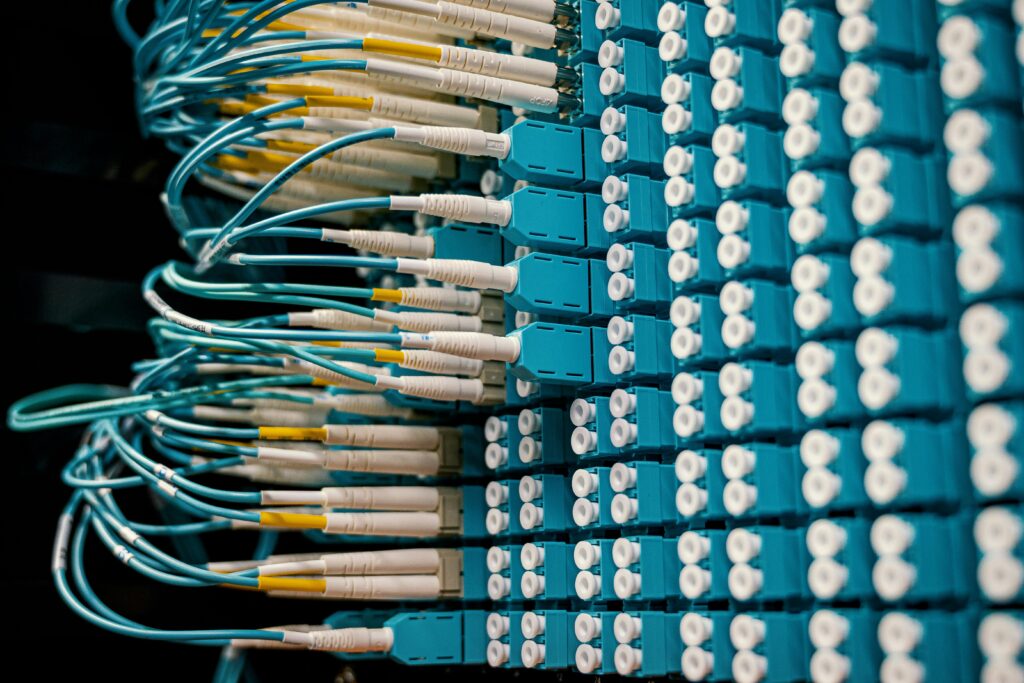
Fiber strands terminated and spliced into patch panels and enclosures, finished cleanly and labeled.
Testing & Certification
Every strand is tested for light loss after installation, and results are documented for your records.
Upgrades & Expansion
Adding strands, replacing aging multimode or extending fiber to new spaces as your network grows.
Choosing the Right Fiber
The right fiber type depends on distance, the equipment on each end and how your network will grow. We recommend fiber type, strand count and connector style for each run, so you do not pay for capacity you will not use or run short when you expand.
Single-mode (OS2)
The standard for building-to-building and campus links. Supports the highest speeds over the longest distances and is the safest long-term choice for new backbones.
Multimode (OM3/OM4)
Works with lower-cost optics over shorter runs, making it common for links within a building and between racks in a data center.
Strand count
We recommend spare strands beyond immediate needs. Pulling new fiber later costs far more than including extra strands on day one.
Connectors & enclosures
Rack-mounted enclosures, labeled ports and protected pathways keep fiber clean, organized and easy to change.
How We Work
One accountable team from planning to final documentation.
Assessment & Design
We confirm distances, equipment, pathways and growth plans, then design the fiber plant and strand counts.
Pathway & Installation
Fiber is pulled through protected pathways with the correct bend radius and support, using cable rated for each space.
Termination
Strands are terminated or spliced into enclosures and patch panels and labeled for easy identification.
Test & Document
Each strand is tested for loss, and you receive test results and as-built documentation.
Why Infinity Networks
Founded in 1999 by U.S. Marines, Infinity Networks brings discipline, accountability and decades of experience to every fiber optic cabling project.
- 25+ years installing copper and fiber in Dallas-Fort Worth
- BICSI-certified technicians and an RCDD on staff
- Fiber designed alongside your copper cabling and telecom rooms
- SBA-certified Veteran-Owned Small Business
- National vendor network for multi-site projects
Frequently Asked Questions
Common questions about fiber optic cabling.
Single-mode fiber has a very small core that carries light in a single path, which allows very long distances and high bandwidth. It is the standard for building-to-building and campus links. Multimode fiber has a larger core and works with lower-cost optics over shorter distances, which makes it common inside buildings and data centers. Many projects use both.
It depends on the equipment you are connecting, whether you need redundant links and how much you expect to grow. We generally recommend spare strands beyond immediate needs, because adding strands later means pulling new cable through the same pathways.
They do different jobs. Fiber is best for backbones, long distances and high-bandwidth links between rooms and buildings. Copper is best for connecting devices such as computers, phones and wireless access points, and it can deliver Power over Ethernet. Most business networks use a fiber backbone with copper to the endpoints.
After termination, each strand is tested to measure light loss and confirm it falls within the acceptable loss budget for its length and connections. You receive the results with your project documentation.
Yes. We can evaluate and test existing fiber, then recommend whether to reuse it, re-terminate it or replace it based on its type, condition and the speeds you need.
A backbone between telecom rooms in one building can often be completed in a few days. Building-to-building and campus projects depend on the pathways available, and we provide a schedule with your proposal.